
The Royal Netherlands Academy of Arts and Sciences has published its advisory report “Science is the Prescription”, a comprehensive analysis of how scientific research must underpin pharmaceutical care across its full life cycle.
The report is grounded in a clear and pressing context. Healthcare systems face growing pressure due to ageing populations, rising costs, workforce shortages, and increasing demand for innovative treatments. In this context, the report argues for a shift towards “appropriate pharmaceutical care”, defined as care that is effective, affordable, patient-centred, and sustainable.
A central message of the report is that scientific research must not be limited to early
drug development. It must play a continuous role across the entire life cycle of medicines, from prioritisation and clinical trials to post-registration use and real-world evaluation. This includes strengthening evidence generation beyond regulatory approval, where uncertainty on real-world effectiveness often remains.
The report highlights several key gaps in current pharmaceutical systems. Drug development priorities are often driven by commercial incentives rather than public health needs. At the same time, many medicines are authorised based on limited or indirect evidence, with insufficient data on long-term outcomes or real-world effectiveness.
To address these challenges, the report calls for a stronger integration of science into decision-making. This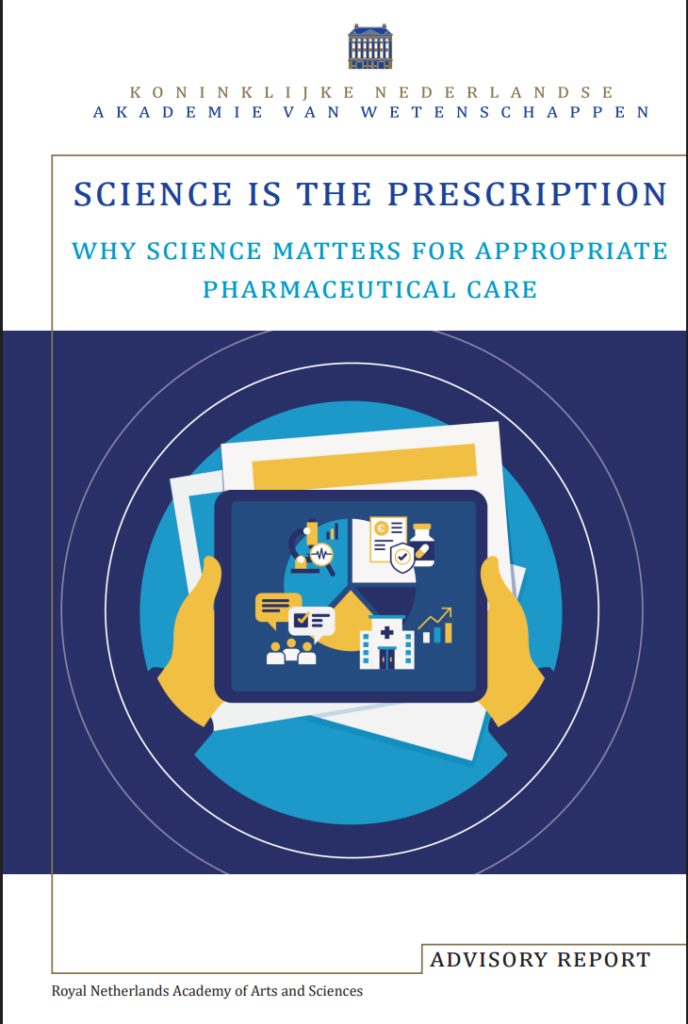 includes:
• Aligning research priorities with unmet medical needs and disease burden
• Expanding post-registration research to assess real-world effectiveness and optimise use
• Developing “learning healthcare systems” where clinical data continuously informs practice
• Strengthening patient involvement in research and decision-making
• Enhancing collaboration between academia, regulators, policymakers, and industry
Importantly, the report also emphasises that scientific evidence alone is not sufficient. Decisions on pharmaceutical care must also consider ethical, social, and economic dimensions, including fairness, solidarity, and sustainability.
This publication strongly resonates with ongoing discussions within the FEAM network, particularly on the appropriate use of medicines, the role of evidence in policy, and the need to ensure that innovation translates into meaningful health outcomes. It provides a solid scientific and policy foundation to inform future work at European level, including ongoing reflections on data use, access to medicines, and healthcare sustainability.
 READ THE FULL REPORT HERE Download the report